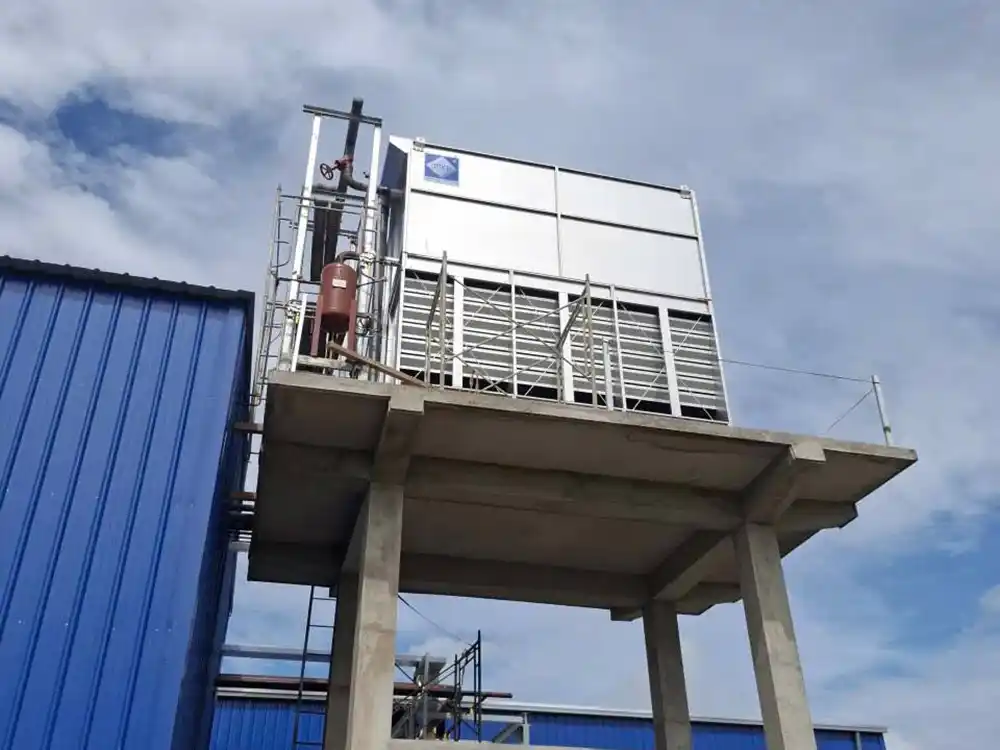
A practical guide for selecting air-cooled heat exchangers where water is limited or high ambient temperatures matter.
Start with the project inputs
For industrial air cooled heat exchanger, project teams should document process fluid, inlet and outlet temperatures, flow, heat load, design dry-bulb temperature, elevation, dust exposure and allowable pressure drop. This keeps the discussion tied to the operating duty instead of a generic catalogue comparison.
Selection should reflect real operation
Air-cooled units need clear intake and discharge paths; poor layout can recirculate hot air and reduce real capacity. Review the annual load profile as well as the peak case, then check maintenance access, controls, utility availability and future expansion before finalizing a layout.
Move from data to a workable solution
HACST engineers can assess the application data and compare closed-circuit cooling tower, open cooling tower, evaporative condenser, air-cooled heat exchanger and dry and adiabatic cooling system options where appropriate. Use the project brief to identify the route that supports reliable operation, then contact HACST for a technical discussion.