Dry & Adiabatic Cooling Systems


1. What Is a Dry & Adiabatic Cooling System?
HACST industrial dry coolers and adiabatic cooling systems reject heat through finned-tube heat exchangers and controlled airflow. Dry-only and peak-condition adiabatic operation can be evaluated around heat load, fluid, climate, water-use target, footprint, sound limits and controls.
Our engineers help compare dry, adiabatic and direct evaporative options for data centers, HVAC, refrigeration and industrial process cooling.
2. How It Works
Hot water from the system is pumped to the top of the tower and distributed evenly over the fill media (heat exchange surface). As the water flows downward through the fill, a fan draws ambient air upward or across the tower. A small portion of the water evaporates, absorbing heat from the remaining water and lowering its temperature. The cooled water is then collected in the cold water basin at the bottom and returned to the system.
3. Key Features
- High heat transfer efficiency through direct water-air contact
- Simple structure and relatively low initial cost
- Effective cooling even in high ambient temperatures
- Suitable for large-scale heat rejection
4. Common Applications
Open cooling towers are commonly used in power plants, chemical processing, steel manufacturing, HVAC systems, data centers, and various industrial processes where large volumes of water need to be cooled economically.
While highly efficient and cost-effective, open cooling towers expose the process water to the atmosphere, which may lead to water loss through evaporation and drift, as well as potential scaling, corrosion, and bacterial growth (such as Legionella). Regular water treatment and maintenance are therefore essential.
5. Why Choose HACST?
40+ years of industry experience with strong R&D capability (20+ engineers, 10+ invention patents, cooperation with Shandong University and Xi’an Jiaotong University)
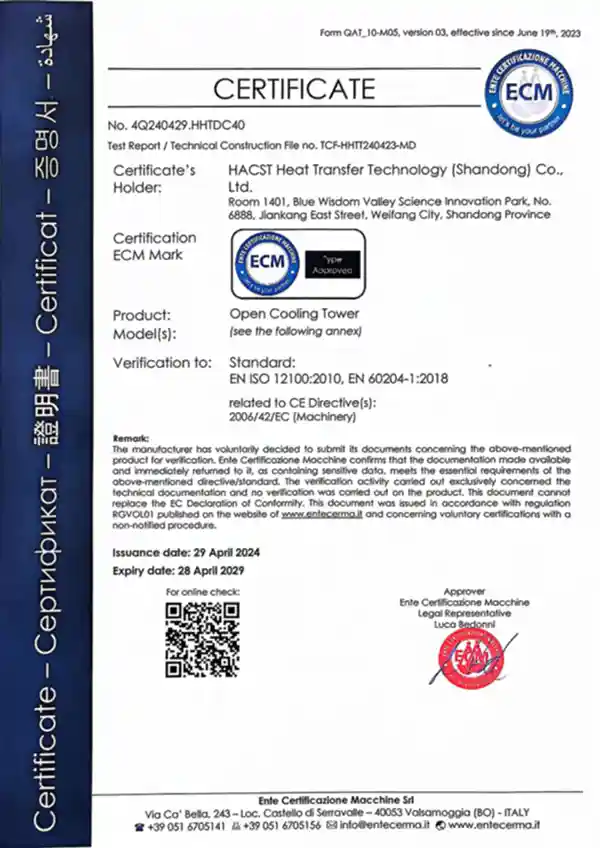
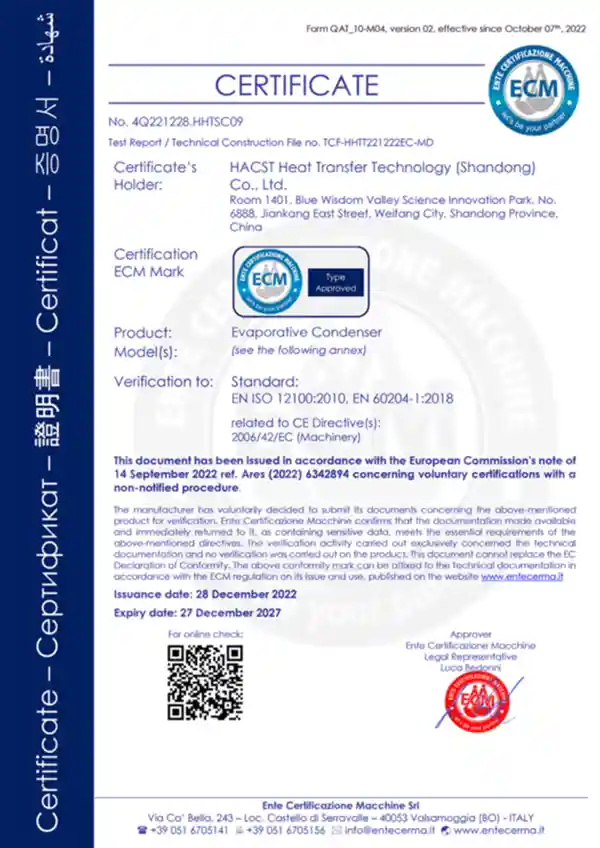
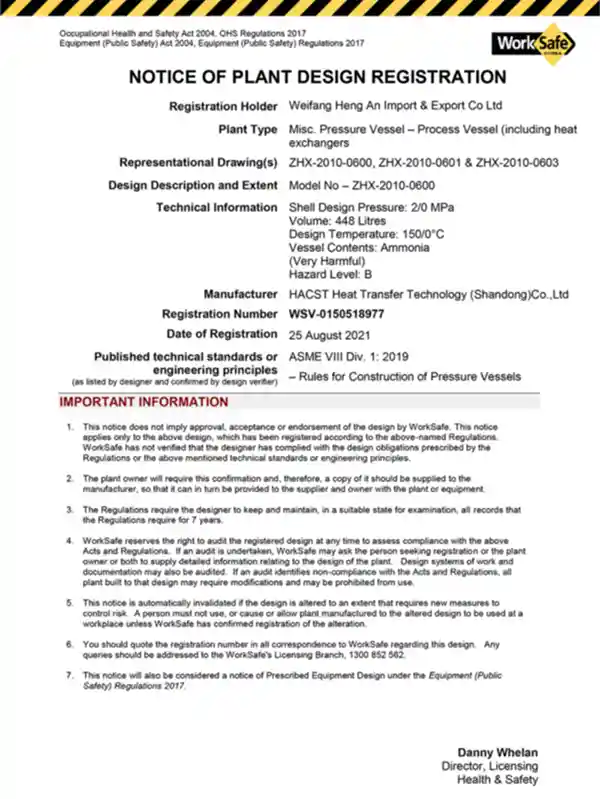
Internationally certified: ISO9001, ISO14001, ISO45001, CTI, CE, TÜV, BV, SGS, AS1210, and more
Professional international trade team of over 40 members, fluent in multiple languages
Full support for standard and highly customized solutions (OEM/ODM)
“HACST” and “Hengan” brands are well-recognized worldwide. Our equipment has been exported to over 100 countries and regions and serves as a trusted partner for global companies such as Coca-Cola, Mayekawa, Emerson, SRF, Hamon, and many others.
With strict quality control and comprehensive after-sales service, we are committed to providing reliable, efficient, and eco-friendly cooling solutions.
Welcome to contact us for inquiries or customized requirements. HACST looks forward to being your long-term partner!
Our Customers
Our Certificates




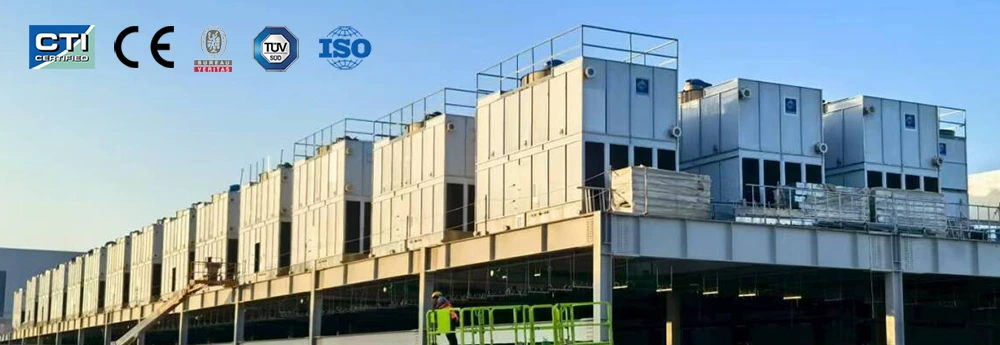
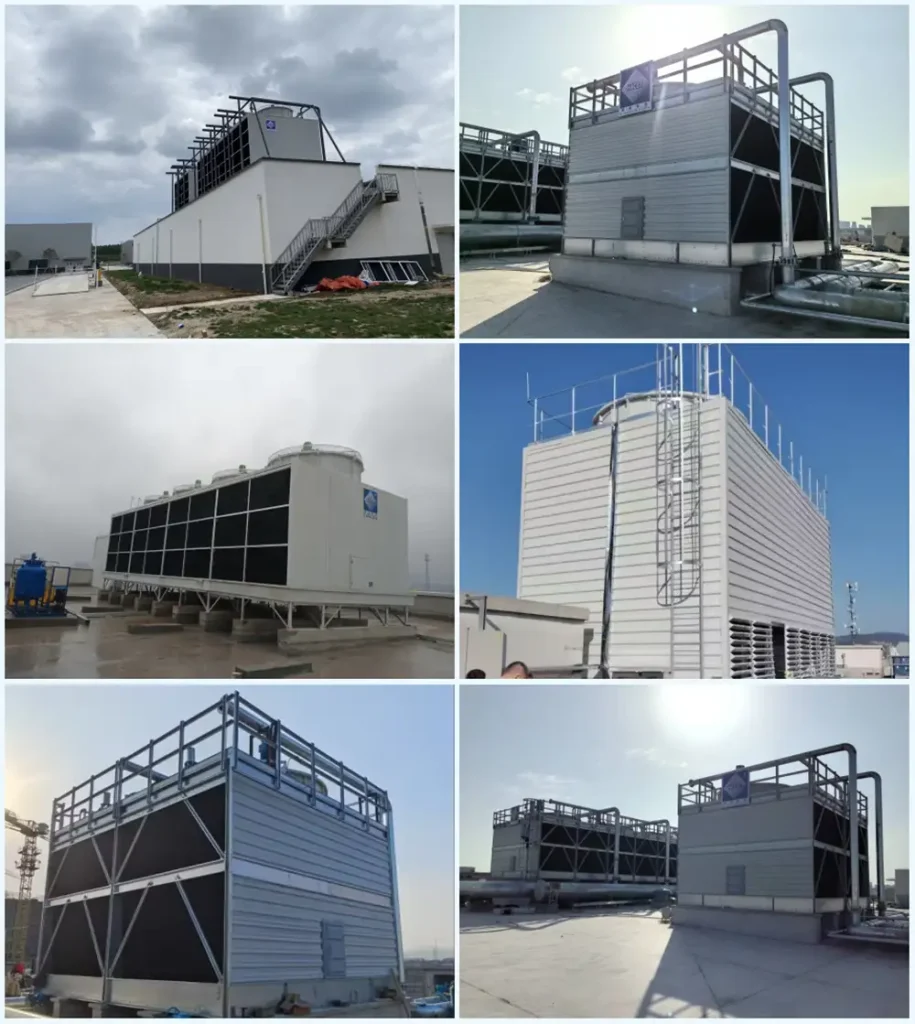
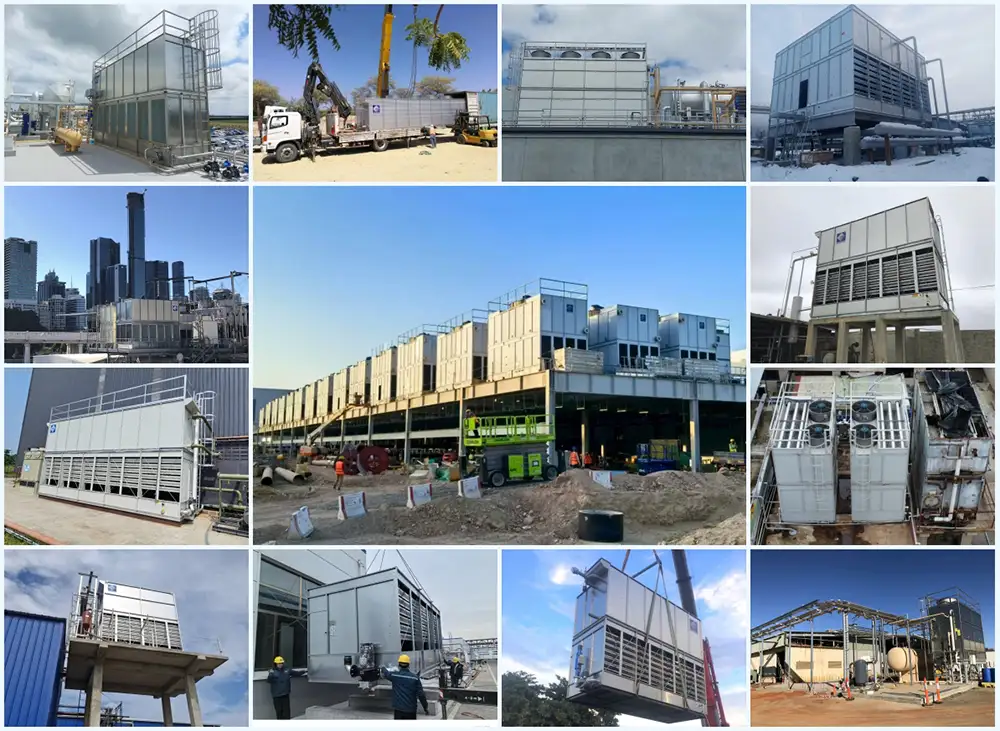
Some of Our Projects
Dry Coolers and Adiabatic Cooling: When Each Mode Fits
Both systems use finned-tube heat exchangers and ambient air. A dry cooler targets low water use, while an adiabatic cooler adds controlled pre-cooling during peak ambient conditions to reduce unit size or protect capacity.
| Selection factor | Industrial dry cooler | Adiabatic dry cooler |
|---|---|---|
| Water strategy | Dry operation with no routine evaporative water use. | Water used selectively for peak-condition pre-cooling. |
| Best fit | Water-constrained sites and moderate design ambient conditions. | High ambient peaks where added capacity or footprint reduction is needed. |
| Operating focus | Simple water-free heat rejection and low maintenance. | Controls balance thermal performance, annual water use and energy. |
Information Needed for a Reliable Selection
Where These Systems Are Applied
When is adiabatic cooling preferable?
It can be a strong fit when a dry-only design would be too large or when capacity needs support during a limited number of hot hours.
Can water use be limited?
Yes. Controls can restrict pre-cooling to defined ambient and load conditions, allowing an annual water-use target.
What should be compared against a cooling tower?
Compare water availability, climate, approach temperature, process fluid, maintenance resources, energy and life-cycle cost.
Which controls are useful?
VFD fans, temperature-based staging, adiabatic enable logic and monitoring help match operation to real demand.
Share operating temperatures, climate and water strategy for an engineered recommendation.
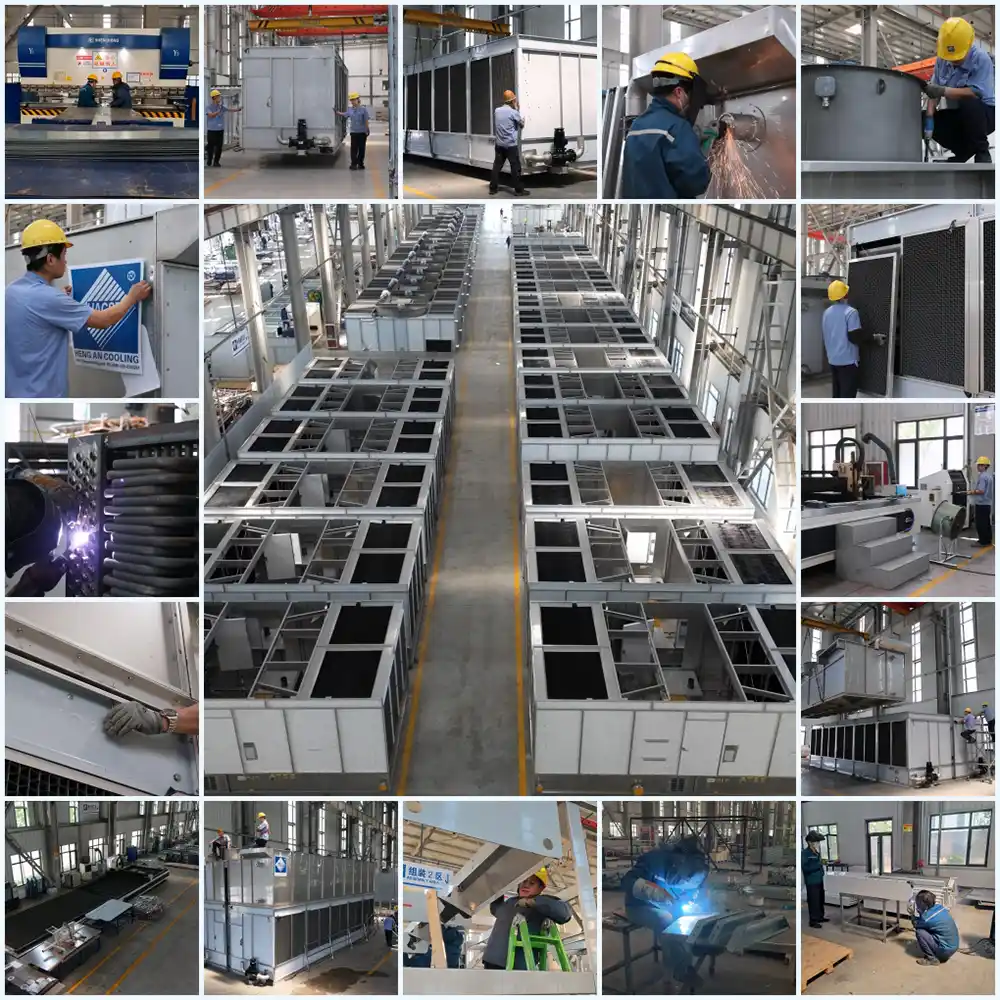
Our Workshop