
Efficient refrigerant condensation for industrial refrigeration systems
HACST evaporative condensers combine coil heat transfer, recirculating water and forced airflow to reject heat efficiently. The final configuration is selected around refrigerant duty, climate, water management and site integration requirements.
Specified around operating conditions and site requirements
Refrigerant type, condensing temperature, ambient conditions, water quality, noise limits and service access are considered before the unit arrangement is confirmed.
- Application-led selection: the configuration begins with the actual operating duty and project objective.
- Practical integration: installation footprint, access, controls and service requirements are considered early.
- Long-term operation: material, water, airflow and maintenance considerations are reviewed for the operating environment.
Configuration and performance considerations
Product OverviewRemove product image
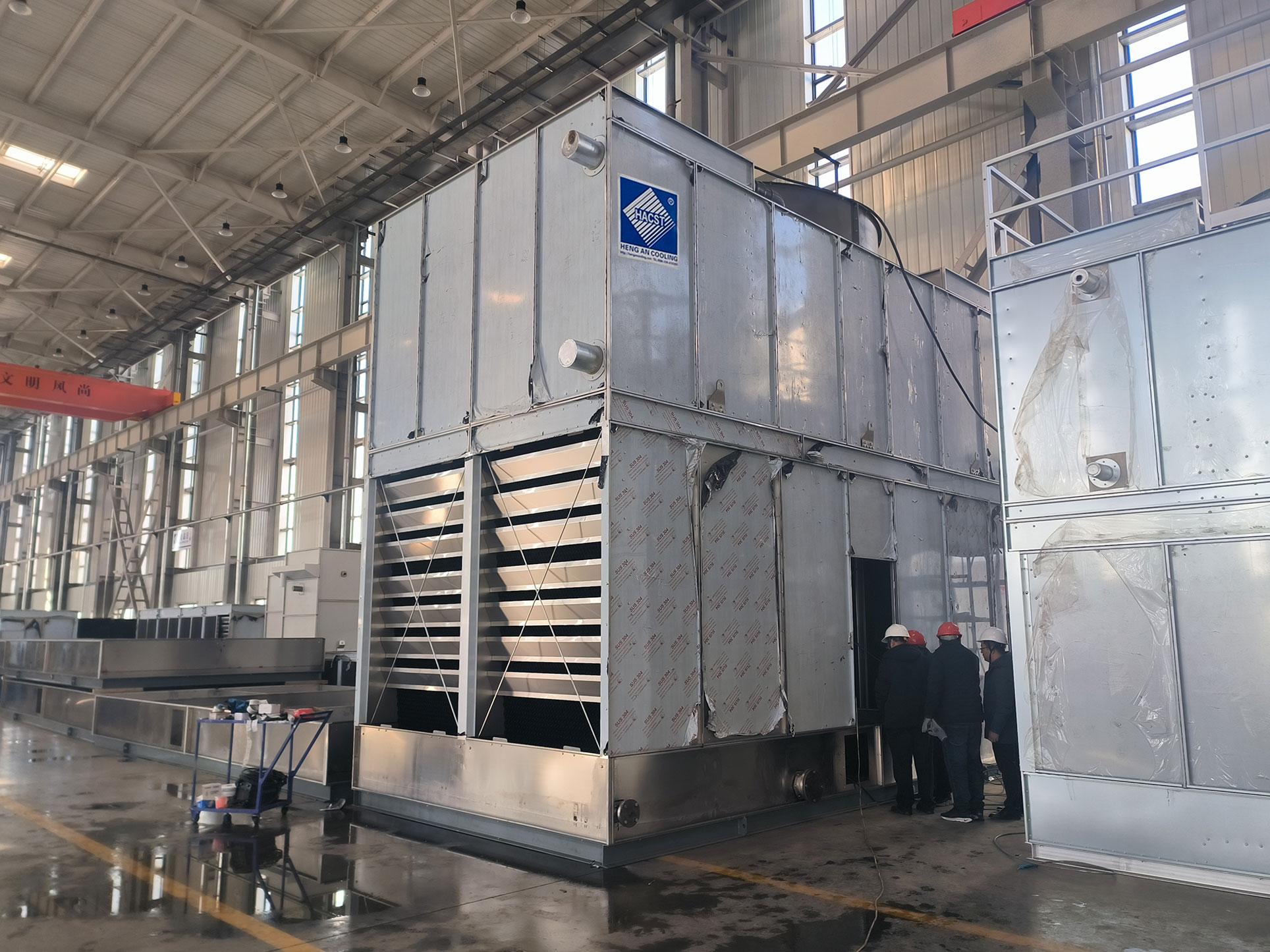
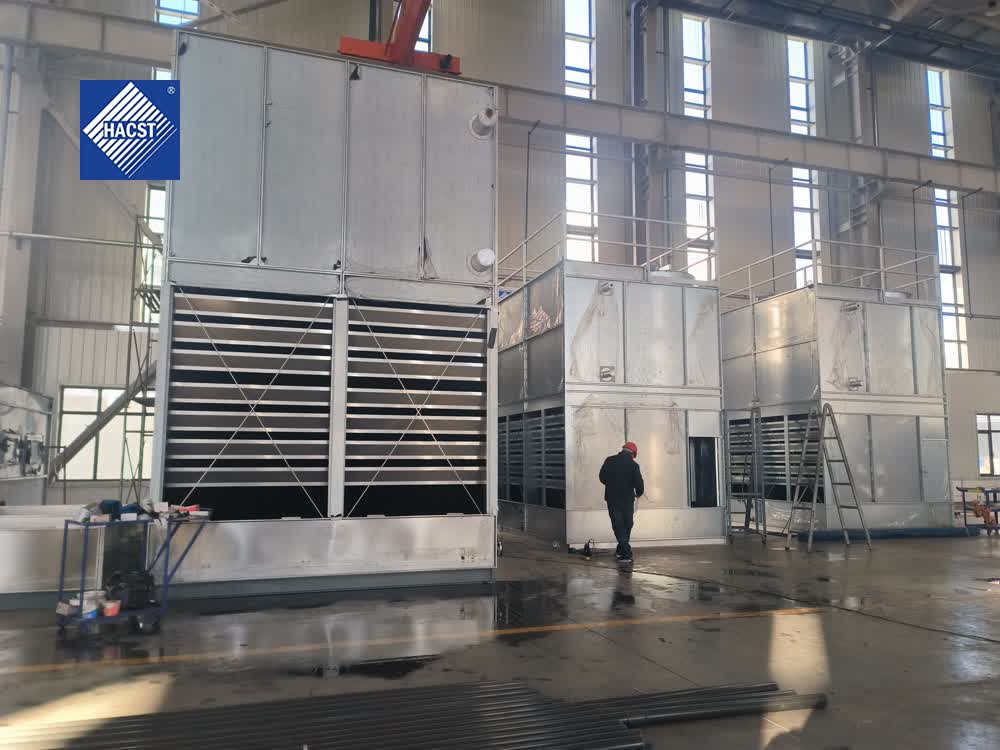
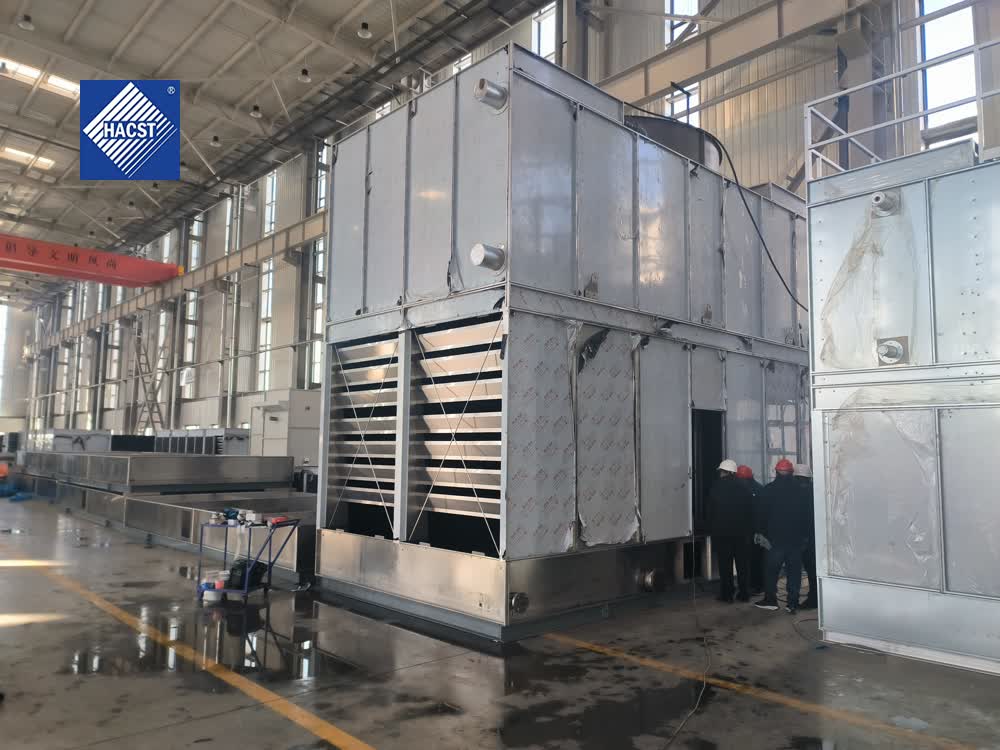
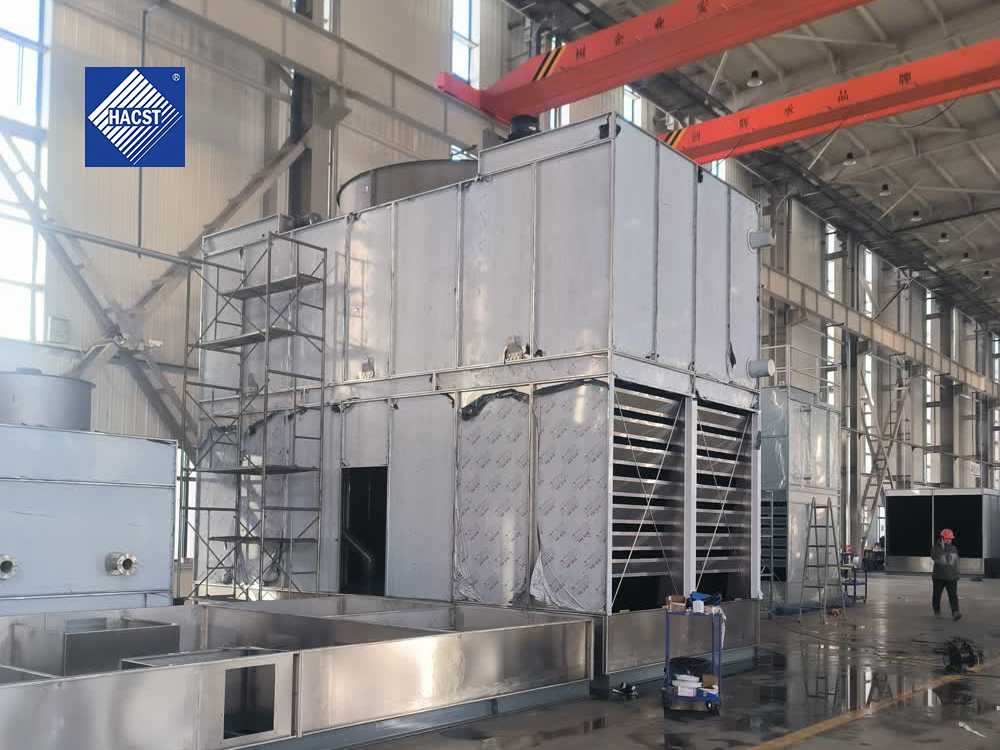
The ZCX employs a crossflow geometry: ambient air enters horizontally through side louvers and passes across coil/fill areas before discharging upward via axial fans. A gravity-fed hot-water basin simplifies distribution, reducing pump head and improving service access. ZCX is favored for quiet operation and straightforward maintenance while still delivering the evaporative efficiency benefits that lower condensing temperature.
Working Principle
Refrigerant condenses in the coil as gravity-fed water wets the coil surface. Horizontal airflow traverses the wetted coil and any auxiliary fill, transferring heat through a combination of sensible and latent mechanisms. The cooled water collects in the basin for recirculation. Drift eliminators minimize water carryover, and the open basin architecture allows quick inspection and cleaning.
Crossflow Advantages
- Lower Pump Head: Gravity distribution avoids high spray pressure.
- Quiet Operation: Reduced fan static and lower air path resistance.
- Easy Access: Basins and coils are service-friendly, reducing downtime.
- Stable Wetting: Orifice trays provide uniform coverage across coil plan area.
Applications
- Urban food and beverage facilities with strict noise envelopes.
- Pharmaceutical and electronics plants prioritizing maintenance access.
- Cold rooms, distribution centers, and light industrial refrigeration.
Sizing & Selection
Select for design wet-bulb and target condensing temperature. For extremely low approach targets, consider combined-flow (ZHX) or larger ZCX frames with low-speed fans. Material selection matches water chemistry and airborne contaminants; stainless coils are advised where chlorides or sanitation chemicals are present. Acoustic requirements drive blade selection, fan diameter, and VFD strategy.
Energy & Water Efficiency
ZCX’s low-pressure-drop air path reduces fan energy. Water savings come from controlled blowdown, high-efficiency eliminators, and filtration. Seasonal strategies—night reset of condensing pressure and VFD fan turndown—yield strong part-load efficiency in temperate climates.
Materials & Sanitation
Coils in HDG or stainless; casing in galvanized or painted steel, with SS options for hygiene-critical zones. Smooth basin geometries and sloped floors reduce biofilm risk and speed cleaning. Access doors enable nozzle and eliminator inspection without full shutdown.
Controls & Options
- Fan VFD tied to condensing pressure control with wet-bulb tracking.
- Conductivity-based blowdown and make-up valves.
- Basin heaters/freezing protection for winter duty.
- Acoustic baffles and low-tip-speed blade kits for quiet zones.
Installation & Maintenance
Provide side intake clearances; avoid recirculation by observing discharge height and prevailing winds. Commissioning includes verifying even tray flow and nozzle patterns. Maintenance: quarterly basin clean-out, nozzle descaling, eliminator inspection, and periodic coil integrity checks.
Development Trends
ZCX evolution focuses on ultra-low-noise fan systems, corrosion-resistant basins, and modular sections for rapid on-site assembly. Analytics-driven maintenance and remote monitoring are increasingly standard, improving uptime and reducing total cost of ownership.
Where this solution adds value
Each project is assessed around its operating conditions, environmental requirements and service expectations.
Four inputs for a more accurate equipment selection
- Confirm condensing dutyProvide refrigerant, heat load and required condensing conditions.
- Review water conditionsIdentify supply quality, treatment approach and drainage requirements.
- Check layout and airflowShare footprint, ventilation, noise and maintenance-clearance constraints.
- Coordinate controlsConfirm fan, pump and automation requirements.
Need help with your equipment selection?
Send your operating data and project requirements. HACST will help define a practical cooling solution.