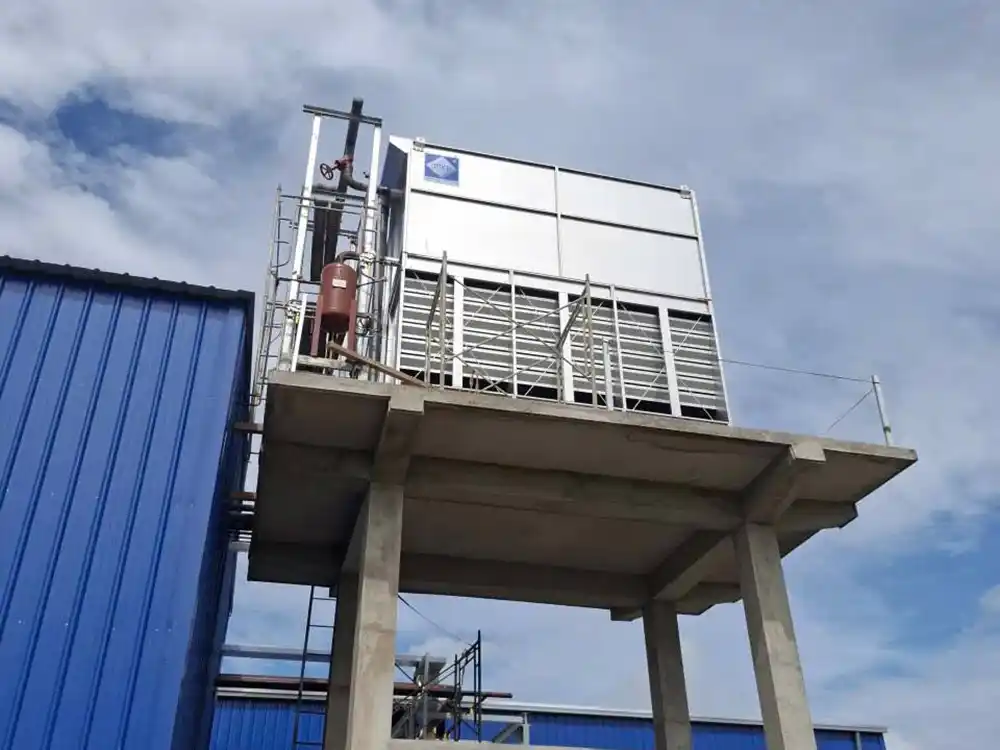
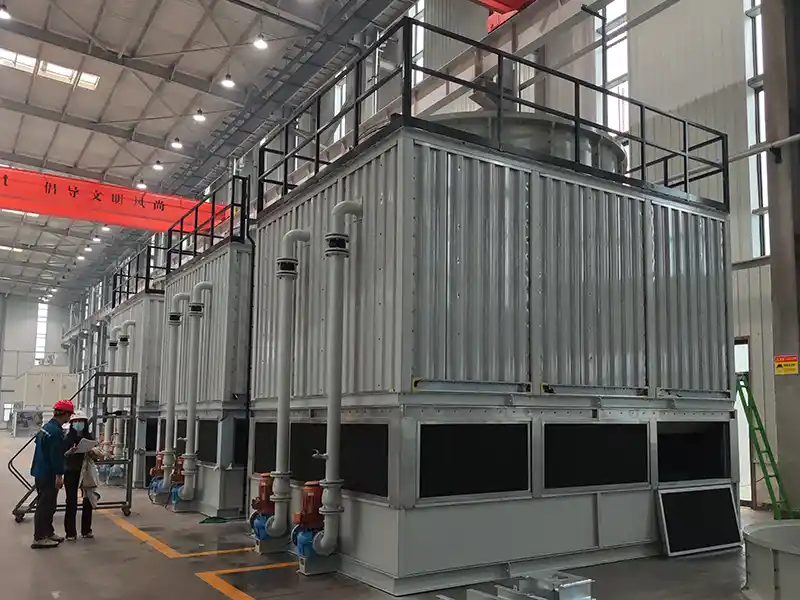
An ACHE heat exchanger (air-cooled heat exchanger) rejects process heat directly to ambient air without an evaporative water circuit. It is widely considered for water-limited industrial sites, high-temperature process duties, power generation, chemical processing and refrigeration projects. Correct selection depends on the real thermal duty, design ambient temperature, process-fluid limits, fan arrangement, noise requirement and maintenance access—not only the nominal heat-transfer area.
What is an ACHE heat exchanger?
An ACHE moves process fluid through finned tubes while axial fans force or draw ambient air across the tube bundle. Heat passes from the process fluid through the tube wall and fins into the moving air. Because heat rejection is dry, the system can reduce make-up water, water-treatment equipment and plume compared with evaporative equipment. The trade-off is that achievable outlet temperature is constrained by the design dry-bulb temperature and the selected temperature approach.
Project data required before ACHE selection
A reliable quotation starts with a complete design basis. The following inputs allow the manufacturer to check thermal performance, pressure drop, materials, fan power and footprint together.
| Selection input | Why it matters |
|---|---|
| Heat duty or process load | Defines the required heat-rejection capacity at the design condition. |
| Fluid composition and concentration | Affects thermophysical properties, compatibility and fouling allowance. |
| Inlet and required outlet temperatures | Establishes the temperature change and approach to ambient air. |
| Flow rate and allowable pressure drop | Controls tube-side velocity, circuiting and pumping requirements. |
| Maximum design dry-bulb temperature | Sets the most demanding air-side condition for dry operation. |
| Site elevation, dust and corrosion exposure | Changes air density and influences coil, casing and fin material choices. |
| Noise limit and available electrical supply | Guides fan diameter, speed, motor and control strategy. |
| Installation footprint and maintenance access | Determines bundle arrangement, lifting zones and service clearances. |
Design ambient temperature and approach
The design dry-bulb temperature should reflect the project location and required operating reliability. A very small approach between process outlet temperature and ambient air usually requires more coil surface, more airflow or a larger footprint. Project teams should distinguish the absolute peak temperature from the temperature used for continuous design, then define what reduced capacity or temporary temperature rise is acceptable during extreme hours.
For a glycol or water loop, fluid concentration changes heat capacity, viscosity and pressure drop. For hydrocarbon, refrigerant or other process duties, the manufacturer also needs fluid properties across the full operating range. Using catalogue water data for a different fluid can produce a misleading selection.
Forced-draft versus induced-draft arrangement
In a forced-draft ACHE, fans are installed below or upstream of the bundle and push air through it. Motors and drive components remain in the cooler incoming-air stream and are generally accessible. In an induced-draft ACHE, fans draw air through the bundle and discharge it above the unit. The higher discharge velocity can help reduce hot-air recirculation, while drive access and structural layout require careful planning. The best arrangement depends on plot constraints, recirculation risk, maintenance philosophy and noise limits.
Fans, controls and part-load operation
Airflow is a major operating variable. Variable-frequency drives, staged fans or fan cycling can match capacity to seasonal and process-load changes. The control sequence should prevent excessive cycling and keep the process temperature stable. Where low-temperature operation is expected, the control philosophy should also consider overcooling, fluid viscosity and any freeze-protection requirement.
Fan diameter, blade profile and speed influence airflow, motor demand and sound level. A low-noise requirement may call for lower tip speed, additional fan area or acoustic treatment rather than simply reducing airflow after the unit has been selected.
Tube, fin and casing materials
Material selection should be based on both the internal process fluid and the external atmosphere. Tube metallurgy addresses process compatibility and pressure design; fin material and spacing affect air-side performance, corrosion resistance and cleanability. Coastal salt, chemical vapour, sand, dust and frequent washdown can justify upgraded materials or protective systems. Wider fin spacing can be easier to clean in dusty service, although it changes the required bundle size.
Site layout and hot-air recirculation
An ACHE can meet its design duty in calculation yet underperform if hot discharge air returns to the intake. Review nearby walls, roofs, pipe racks, adjacent coolers and prevailing wind. Provide a clear intake path and sufficient separation between the discharge and surrounding obstructions. Multi-cell installations should be assessed as one airflow system rather than as isolated units.
Maintenance and lifecycle checks
- Provide safe access to motors, fans, bearings, tube bundles and cleaning surfaces.
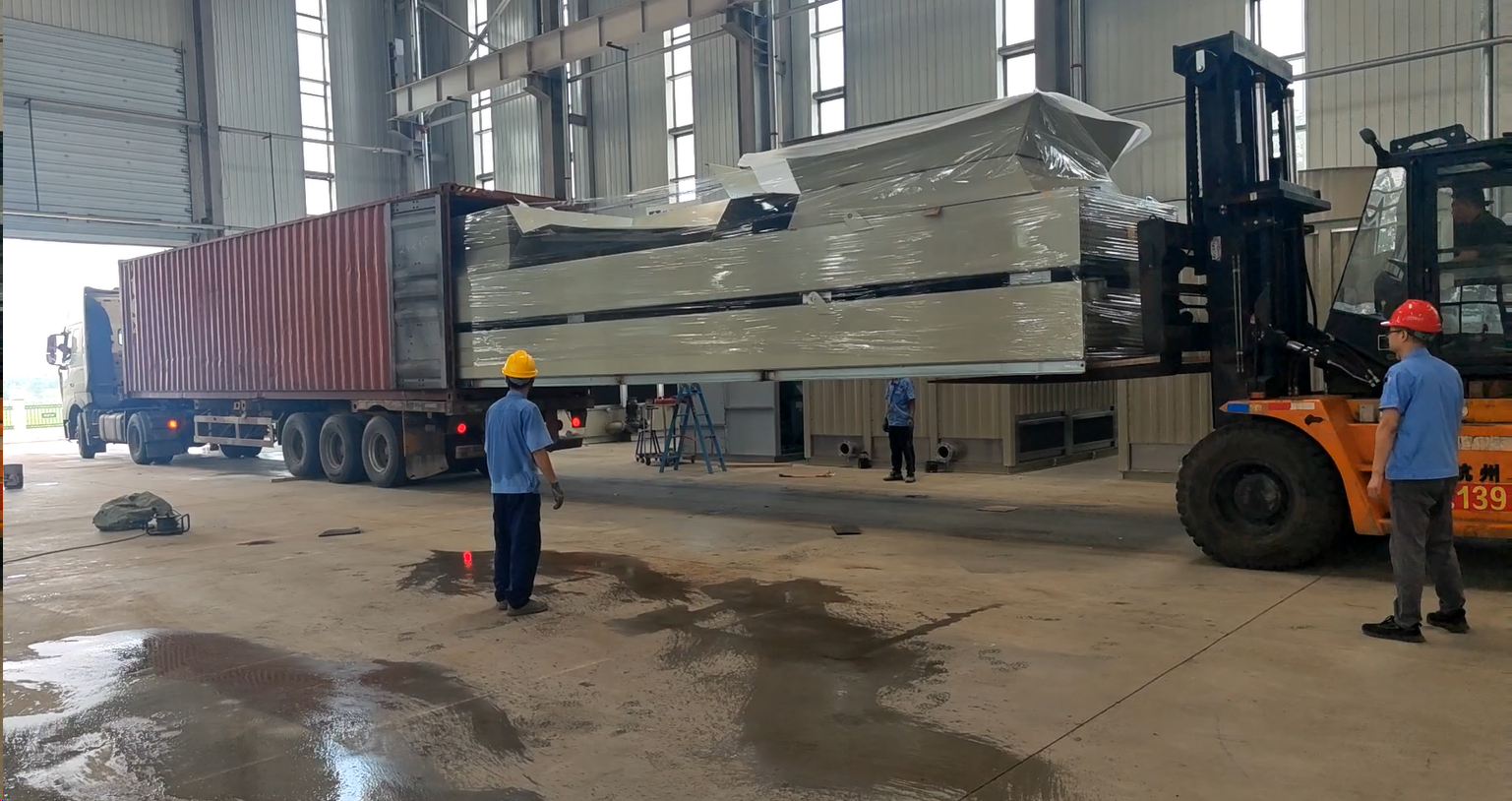
- Allow space for bundle removal, lifting and future replacement.
- Define an inspection routine for fin fouling, vibration, fasteners and drive components.
- Confirm the cleaning method before selecting fin spacing and protective coatings.
- Stock project-critical fan, motor and control components where downtime is costly.
ACHE, dry cooler or adiabatic cooler?
An ACHE is a broad industrial air-cooled exchanger and may cool or condense a process fluid directly. A dry cooler commonly cools a closed water or glycol loop. An adiabatic cooler adds controlled pre-cooling of the incoming air during hot conditions to improve peak performance while limiting annual water use. The correct choice depends on the working fluid, outlet-temperature target, climate, water strategy and maintenance capability.
ACHE selection checklist
- Confirm heat duty, fluid data, flow and temperature limits.
- Define the design ambient condition, elevation and allowable approach.
- Set process-side pressure drop and design-pressure requirements.
- Document noise, power, hazardous-area and control requirements.
- Review corrosion exposure, dust load and cleaning method.
- Validate layout, recirculation risk, lifting access and future expansion.
Frequently asked questions
Does an ACHE require cooling water?
A fully dry ACHE rejects heat to air and normally does not require a recirculating evaporative-water system. Auxiliary cleaning or an optional adiabatic section may still use water depending on the project.
Why does high ambient temperature reduce ACHE capacity?
As ambient air temperature rises, the temperature difference available to drive heat transfer becomes smaller. Maintaining duty may require more surface area, airflow or a higher process outlet temperature.
What information is needed for a quotation?
Provide heat duty, fluid composition, inlet and outlet temperatures, flow rate, design ambient temperature, elevation, allowable pressure drop, materials, power supply, noise limit and site layout.
Can HACST supply an adiabatic option?
Yes. HACST can compare a fully dry ACHE with an adiabatic configuration when the peak outlet-temperature requirement is difficult to achieve with ambient air alone.
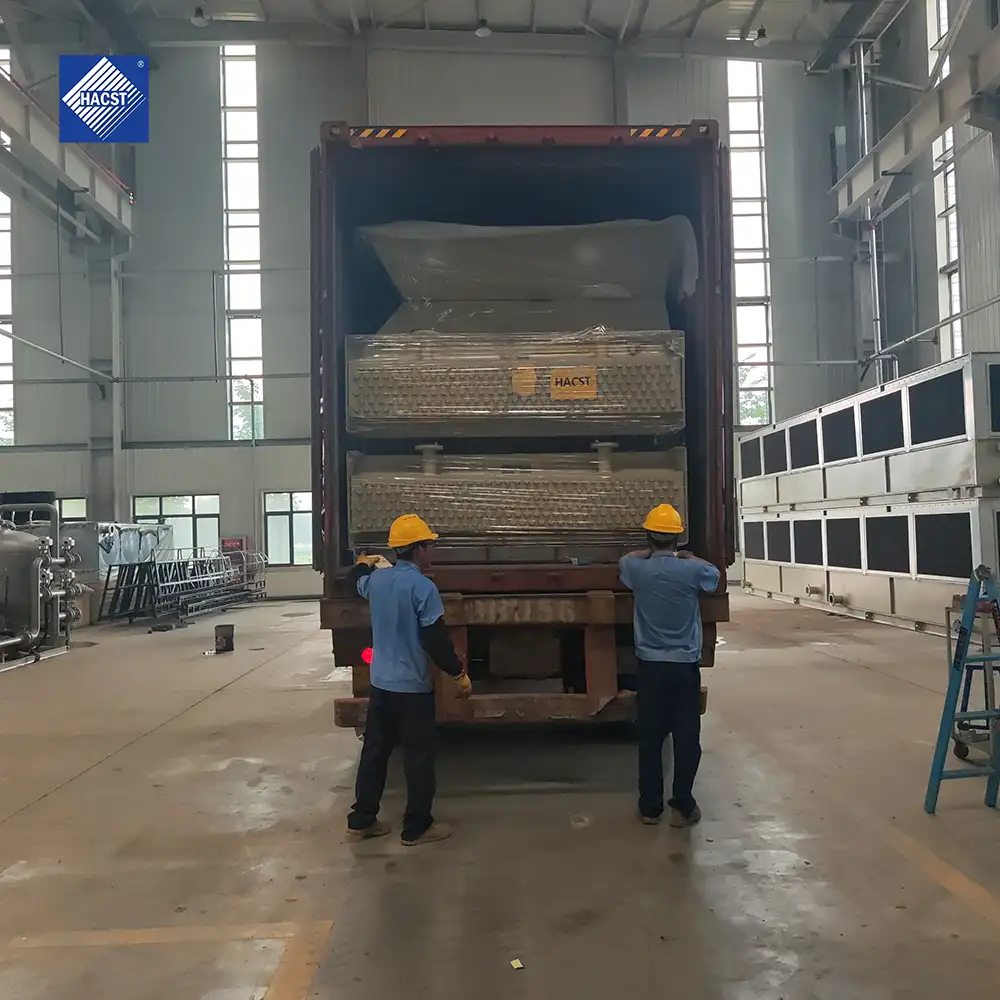
For equipment examples, see the HACST industrial air-cooled heat exchanger and the Australian air cooler installation case. Use the case to review practical considerations for footprint, airflow and installation access.
Discuss an industrial ACHE project
Review HACST air-cooled heat exchangers or send the design basis to our engineering team. Include operating and site data so the proposal can address thermal duty, pressure drop, materials, controls, footprint and service access together.