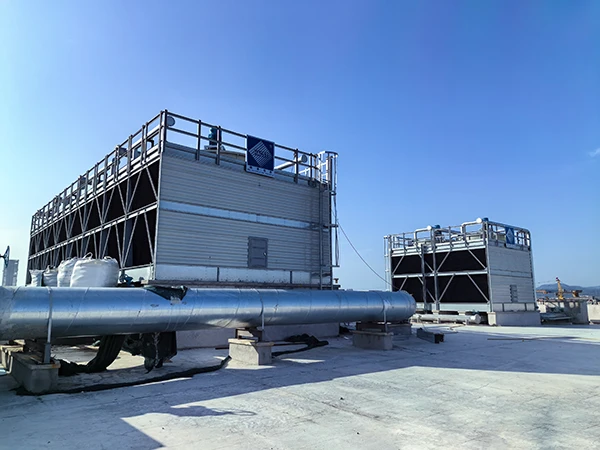
Choosing between a closed circuit cooling tower and an open cooling tower is one of the most important decisions in an industrial heat rejection project. The right choice affects water quality, maintenance workload, equipment life, installation cost, and long-term operating stability.
This guide explains how the two cooling tower types work, where each one performs best, and what engineers and project buyers should check before selecting cooling equipment for process cooling, refrigeration, HVAC, food and beverage, chemical processing, steel, power generation, and similar industrial applications.
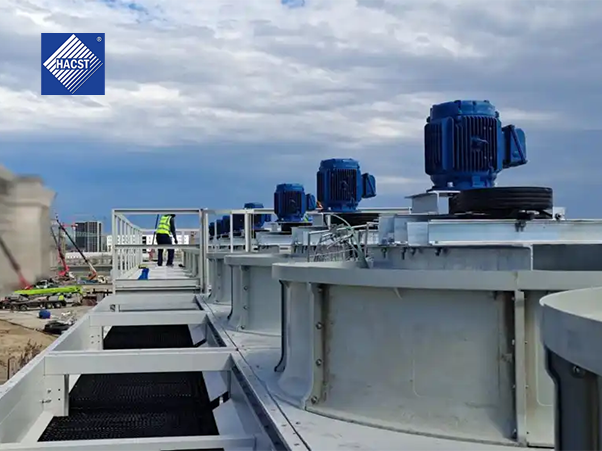
Quick answer: which cooling tower should you choose?
For many industrial projects, the simplest rule is this:
- Choose a closed circuit cooling tower when the process fluid must stay clean, when equipment corrosion risk needs to be reduced, or when maintenance stability is more important than the lowest initial cost.
- Choose an open cooling tower when the system can tolerate direct air-water contact, water treatment is well managed, and the project needs a cost-effective heat rejection solution.
- Consider an evaporative condenser when the goal is to condense refrigerant directly in a refrigeration system.
How a closed circuit cooling tower works
A closed circuit cooling tower keeps the process fluid inside a sealed coil. Spray water flows over the outside of the coil, while air passes through the tower to remove heat by evaporation and sensible heat transfer. Because the process fluid does not directly contact the atmosphere, the loop is protected from dust, airborne contaminants, and oxygen exposure.
This design is especially useful for systems that require stable water quality, such as induction heating, data center cooling loops, compressor jacket cooling, chemical processing, food and beverage process equipment, and industrial chillers. In these applications, fouling or corrosion inside the process loop can create expensive downtime.
How an open cooling tower works
An open cooling tower exposes circulating water directly to air. Warm water is distributed across fill media, air flows through the fill, and part of the water evaporates to remove heat. The cooled water then returns to the system.
Open cooling towers are widely used because they are efficient, simple, and economical. They can be a strong choice for HVAC systems, industrial utilities, and process applications where water treatment and filtration can be properly controlled. The tradeoff is that the circulating water is exposed to airborne dust, biological growth, and water chemistry variation, so operation and maintenance discipline matter.
Closed circuit vs open cooling tower comparison
| Selection factor | Closed circuit cooling tower | Open cooling tower |
|---|---|---|
| Process fluid protection | High. Fluid stays inside a closed coil. | Lower. Water contacts air directly. |
| Water quality control | Easier to protect the internal loop. | Requires stronger water treatment and filtration. |
| Initial investment | Usually higher due to coil and structure. | Usually lower for the same general duty. |
| Maintenance focus | Spray water system, coil surface, fans, pumps. | Fill, basin, drift eliminator, water treatment. |
| Best-fit applications | Industrial process cooling, sensitive equipment, clean-loop systems. | HVAC, general industrial cooling, utility water systems. |
| Long-term reliability | Strong when clean fluid and stable operation are priorities. | Strong when water treatment and cleaning are well managed. |
When a closed circuit cooling tower is the better choice
A closed circuit cooling tower is often the better choice when the cost of process-side fouling is high. If blocked heat exchangers, scale inside piping, corrosion, or unexpected downtime would create production losses, the closed-loop design can provide long-term value.
Closed circuit systems are also suitable when the cooling medium includes glycol or another treated fluid, when ambient dust is difficult to control, or when the site needs a cleaner and more stable process loop. For overseas industrial projects, this can be important because water quality, climate, and service conditions may vary from one region to another.
When an open cooling tower is the better choice
An open cooling tower can be the better choice when the system design allows direct contact between air and circulating water, and when the owner has a reliable water treatment plan. Open towers normally offer a simple structure, strong evaporative cooling performance, and competitive initial cost.
They are commonly selected for large water flow systems, building cooling, and general industrial cooling loops. The key is to size the tower correctly and manage operating conditions such as wet-bulb temperature, makeup water quality, blowdown, drift control, and access for cleaning.
What about evaporative condensers, adiabatic coolers, and air-cooled heat exchangers?
Cooling tower selection is not always limited to closed circuit or open designs. In refrigeration systems, an evaporative condenser may be more direct because it condenses refrigerant instead of cooling water. In water-sensitive or low-maintenance projects, adiabatic coolers or air-cooled heat exchangers may also be considered, especially when water consumption is a major design concern.
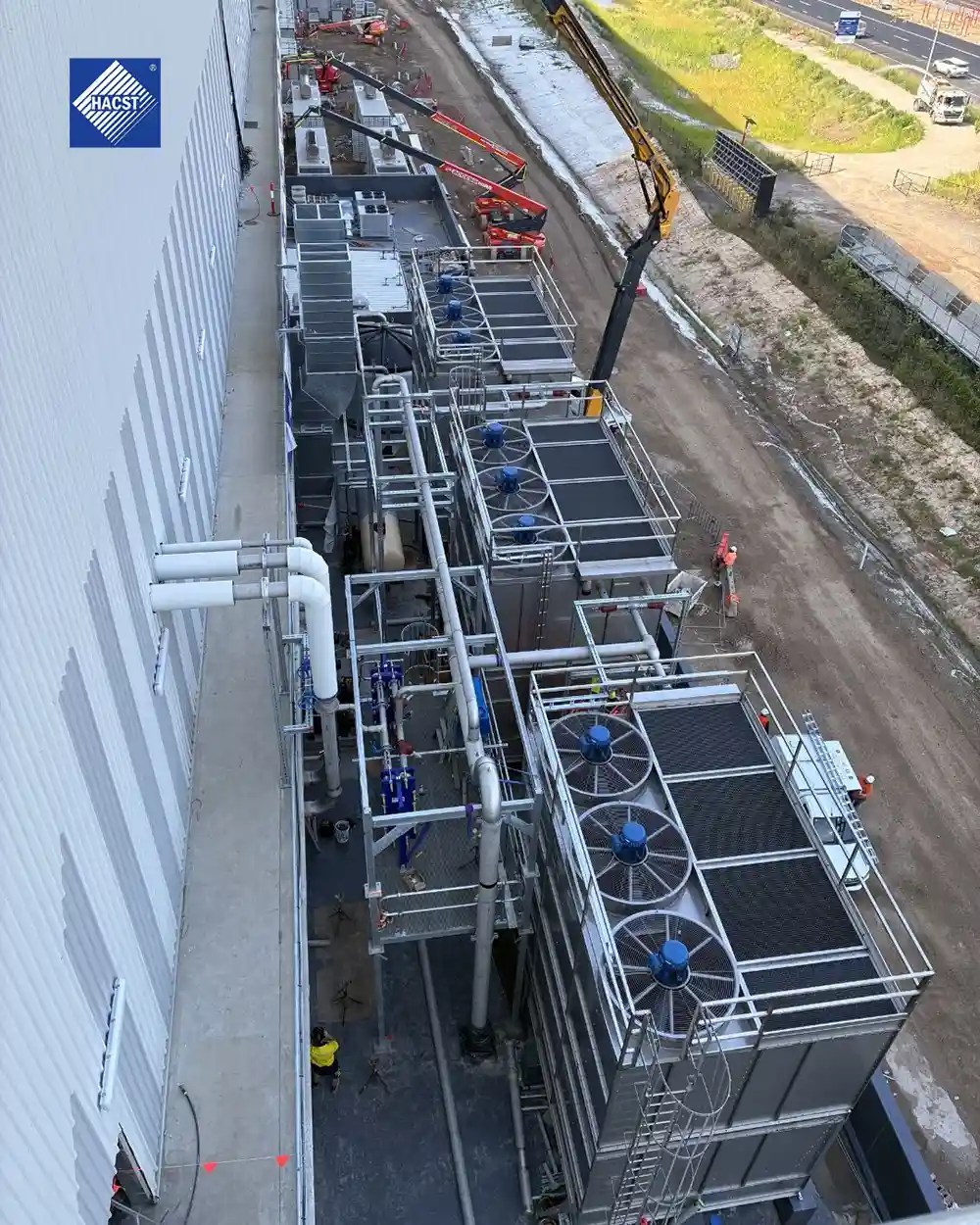
Cooling tower selection checklist
- Heat load: Confirm the required heat rejection capacity, flow rate, inlet temperature, outlet temperature, and design wet-bulb temperature.
- Water quality: Review makeup water hardness, chloride level, suspended solids, and expected water treatment method.
- Process sensitivity: Decide whether the process loop can tolerate contamination or requires a protected closed circuit.
- Installation space: Check footprint, height, air inlet clearance, crane access, and maintenance space.
- Operating environment: Consider dust, freezing risk, high ambient temperature, seawater influence, and local climate.
- Maintenance capability: Match the equipment design with the owner’s cleaning, inspection, and water treatment resources.
- Lifecycle cost: Compare not only purchase price, but also water, energy, chemical treatment, downtime risk, and service life.
How HACST supports industrial cooling projects
HACST designs and manufactures industrial heat rejection equipment including closed circuit cooling towers, open cooling towers, evaporative condensers, adiabatic coolers, air-cooled heat exchangers, and cooling tower parts. For project selection, the most useful starting point is a clear operating condition sheet: heat load, temperatures, flow rate, fluid type, local climate, water quality, installation restrictions, and industry application.
With this information, HACST can help compare equipment types and recommend a practical cooling solution for reliability, efficiency, and long-term service. If you are planning a new industrial cooling project or replacing an existing cooling tower, you can contact HACST Cooling with your operating data for selection support.
FAQ
Is a closed circuit cooling tower more efficient than an open cooling tower?
Not always. Efficiency depends on design conditions, coil performance, airflow, water distribution, and system operation. Open cooling towers can be very efficient, while closed circuit cooling towers provide the added benefit of protecting the process fluid.
Does a closed circuit cooling tower need water treatment?
Yes. The spray water circuit still needs treatment to control scale, corrosion, biological growth, and suspended solids. The advantage is that the internal process fluid loop is separated from the atmosphere.
Which cooling tower is better for industrial process cooling?
If the process fluid must remain clean or downtime risk is high, a closed circuit cooling tower is usually a safer choice. If the application can accept open-loop water and the water treatment program is reliable, an open cooling tower may be more economical.