
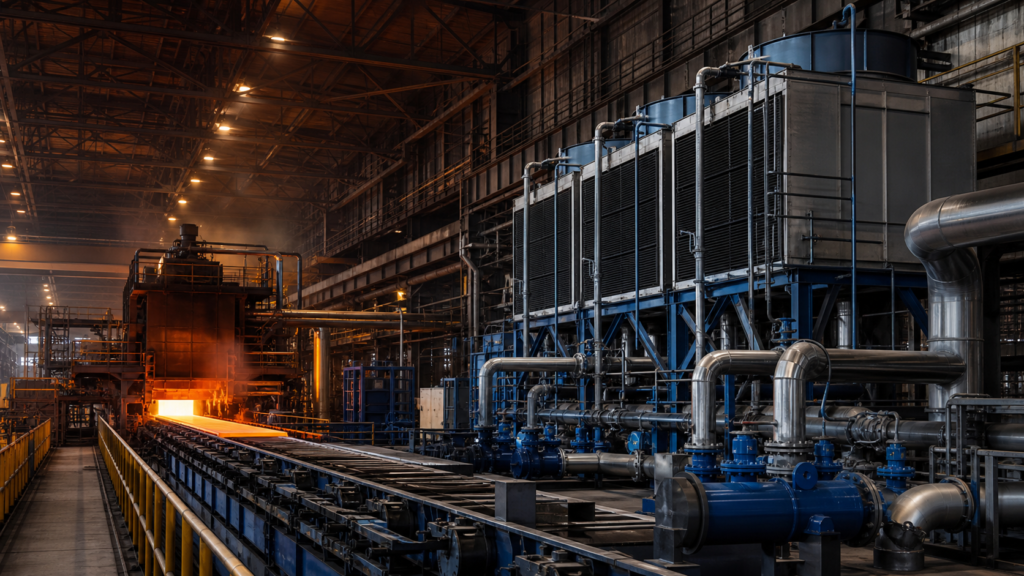
Steel & Metal Processing Cooling Solutions
Steel and metal plants generate substantial heat across furnaces, rolling lines, hydraulic systems, compressors, welding equipment and heat exchangers. HACST supplies open and closed-circuit cooling towers and air-cooled heat exchangers selected for continuous industrial duty, water quality and demanding site conditions.
Request a Metal Processing Cooling Proposal
Where Cooling Is Used
- Rolling mills, casting and material-handling equipment.
- Furnaces, compressors and hydraulic systems.
- Welding, cutting, machining and auxiliary process equipment.
- Heat exchangers and central plant cooling-water loops.
- Continuous production lines with variable or peak heat loads.
Design Challenges
Metal-processing sites may combine high heat loads, dust, scale, vibration, variable production schedules and challenging water chemistry. The cooling system should be selected with filtration, corrosion control, maintenance access, noise, redundancy and future capacity in mind.
Open Cooling Towers
Open towers can provide central cooling-water service where treatment and filtration are properly integrated into the plant utility system.
Closed Circuit Cooling Towers
Closed-loop towers can protect sensitive process fluid from the evaporative water side and support more controlled heat-exchanger operation.
Air-Cooled Heat Exchangers
Air-cooled heat exchangers can reduce water consumption and may suit applications where air-side heat rejection is practical.
Selection Process
- List equipment duties and determine the total heat load.
- Confirm flow, operating temperatures and fluid quality.
- Review dust, vibration, corrosion, water quality and ambient conditions.
- Compare open, closed and air-cooled options against maintenance goals.
- Allow for production peaks, redundancy and future expansion.
Recommended Product Families
RFQ Information
Please provide equipment list, heat load, fluid type, flow rate, inlet and outlet temperatures, site climate, water analysis, dust or corrosion exposure and installation constraints.
Frequently Asked Questions
How does dust affect cooling equipment?
Dust can restrict airflow and increase cleaning requirements. Filtration, coil access, fan selection and a realistic maintenance schedule should be considered during design.
Can a closed-loop tower reduce process-fluid contamination?
It can help separate the process fluid from the evaporative water circuit, but the final result also depends on water treatment, filtration, materials and maintenance.
Discuss Your Metal Processing Cooling Project
Steel & Metal Processing Evidence
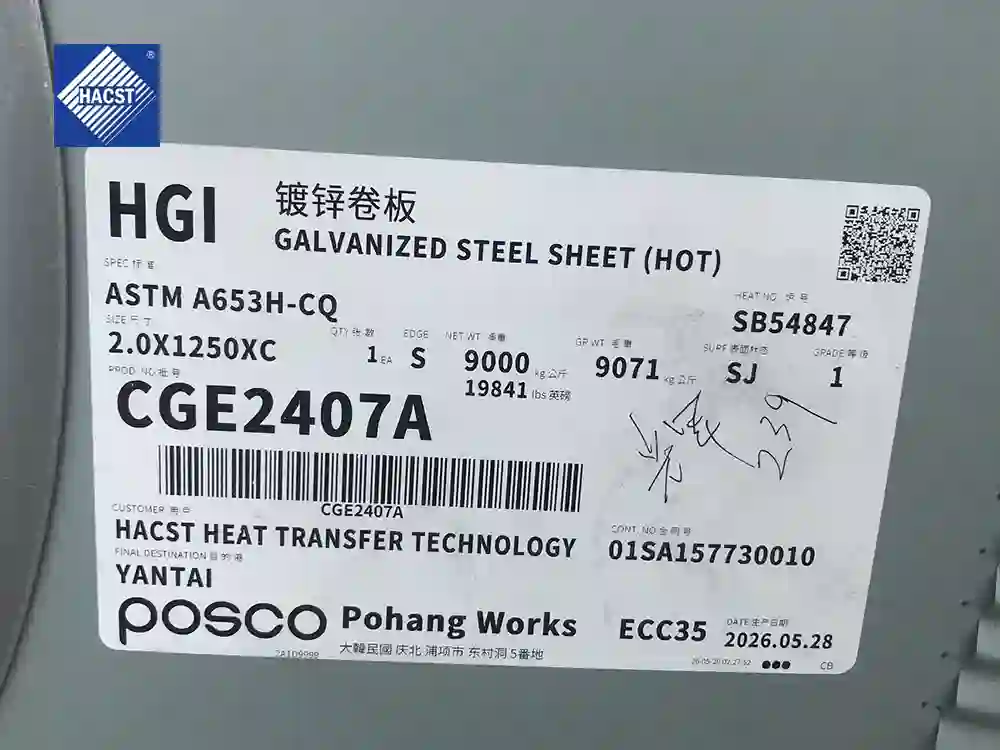

Project Data to Confirm Before Selection
| Equipment list | Rolling, furnace, compressor, hydraulic and heat-exchanger duties |
|---|---|
| Thermal data | Total heat load, flow and inlet/outlet temperatures |
| Environment | Dust, scale, vibration, corrosion and water quality |
| Maintenance | Filtration, cleaning access and production availability |
Providing these details helps our engineers prepare a more accurate equipment selection and technical proposal.