
Industrial Refrigeration Cooling Solutions
Industrial refrigeration plants need reliable heat rejection for compressors, condensers, cold rooms, process chilling and cold-chain operations. HACST helps engineering teams select evaporative condensers, closed-loop systems and air-cooled options around refrigerant duty, climate, water quality and maintenance requirements.
Request an Industrial Refrigeration Proposal
Where Industrial Refrigeration Needs Heat Rejection
- Cold storage warehouses and distribution centers.
- Blast freezing and process freezing lines.
- Food, beverage and seafood refrigeration plants.
- Ammonia and other industrial refrigeration systems.
- Process cooling loops connected to compressors and heat exchangers.
How to Select the Right Condensing Solution
The correct solution depends on refrigeration capacity, refrigerant, design condensing temperature, ambient wet-bulb condition, water quality, corrosion exposure, sound limits and available footprint. HACST reviews these factors together instead of selecting equipment from capacity alone.
Evaporative Condensers
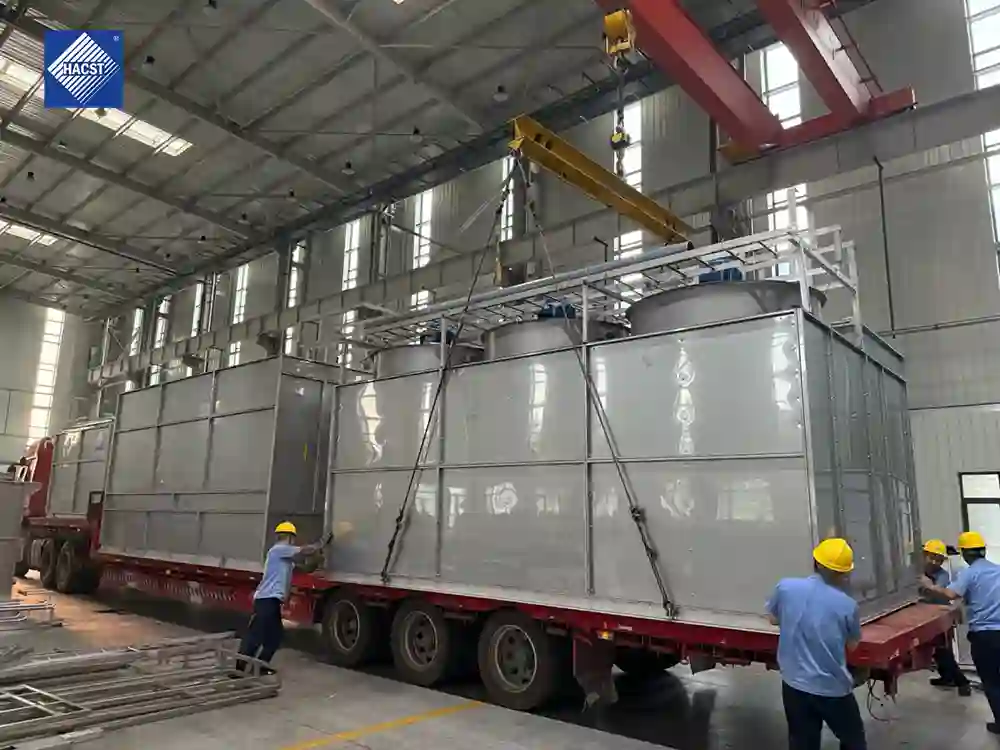
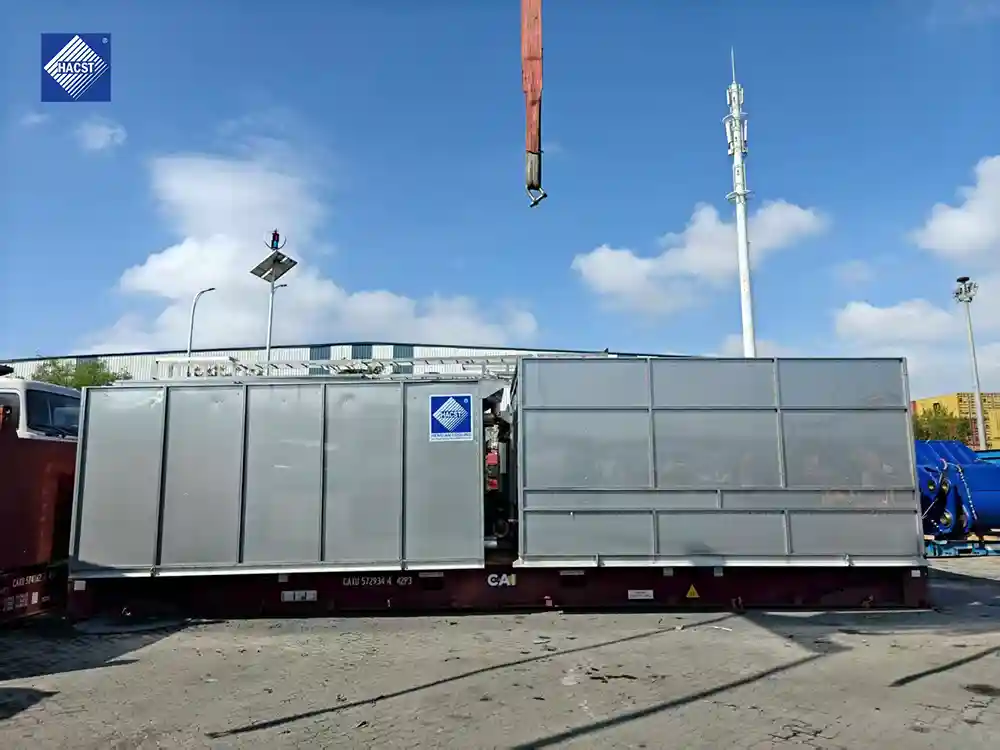
Evaporative condensers combine refrigerant condensation and evaporative heat rejection in one packaged system. They are often considered where condensing performance, footprint and operating cost must be balanced.
Closed Circuit Cooling Towers
Closed-loop cooling towers can support auxiliary process duties while keeping sensitive circulating fluid separated from the evaporative water circuit.
Air-Cooled Heat Exchangers
Air-cooled heat exchangers provide sensible heat rejection where water use, water treatment or discharge requirements make an air-side solution attractive.
Selection and Engineering Checklist
- Confirm refrigeration capacity, refrigerant and design condensing temperature.
- Review ambient dry-bulb and wet-bulb conditions throughout the operating season.
- Assess water availability, water chemistry, corrosion exposure and treatment capability.
- Check fan power, noise, access, cleaning, drift control and service clearances.
- Match the equipment configuration to redundancy and future capacity requirements.
Recommended Product Families
RFQ Information
Please provide refrigerant type, refrigeration capacity, condensing temperature, design ambient condition, operating schedule, water quality, project location, corrosion exposure and installation constraints.
Frequently Asked Questions
Is an evaporative condenser always more efficient than an air-cooled condenser?
Not in every climate or operating condition. The comparison should include wet-bulb temperature, water cost, fan power, maintenance, corrosion and annual operating hours.
Can the system be designed for cold-climate operation?
Yes. Low-ambient operation, fan control, water management, freeze protection and seasonal operating modes should be included during equipment selection.
Discuss Your Refrigeration Project
Industrial Refrigeration Evidence
Project Data to Confirm Before Selection
| Refrigerant system | Refrigerant type, capacity and design condensing temperature |
|---|---|
| Climate | Dry-bulb/wet-bulb design condition and seasonal operation |
| Water strategy | Water availability, chemistry and treatment approach |
| Installation | Footprint, noise, access and future capacity |
Providing these details helps our engineers prepare a more accurate equipment selection and technical proposal.