
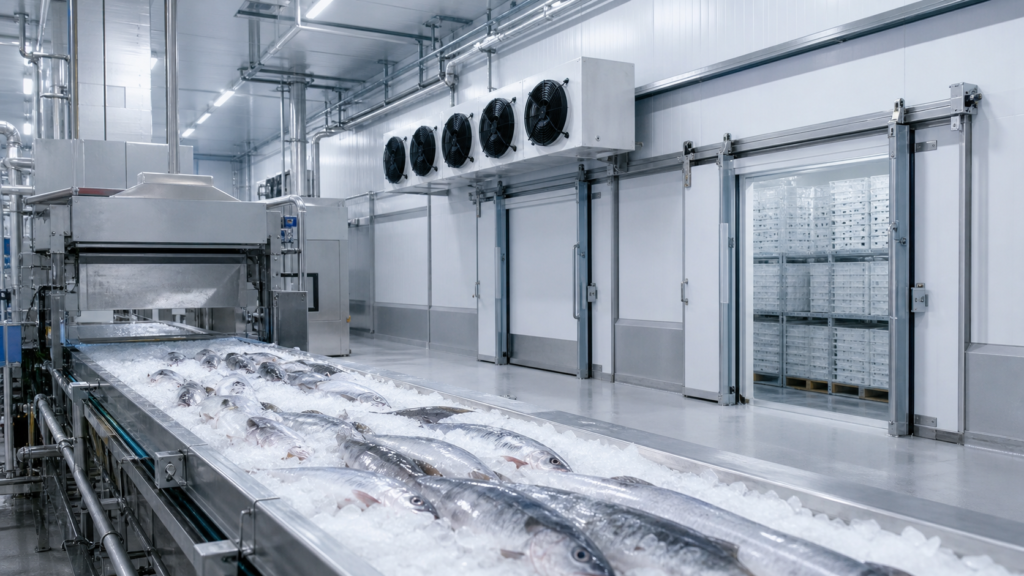
Seafood Processing & Cold Storage Refrigeration
Seafood processing, freezing and cold-storage facilities need dependable refrigeration heat rejection in humid, wet and often corrosion-sensitive environments. HACST provides evaporative condenser and auxiliary cooling solutions selected around the refrigeration duty, refrigerant system, climate and maintenance requirements.
Request a Seafood Refrigeration Proposal
Cooling Requirements in Seafood Facilities
- Continuous operation for cold rooms, blast freezers and processing areas.
- High humidity, washdown water and salt-laden air that can accelerate corrosion.
- Stable condensing conditions to support refrigeration efficiency.
- Easy access for inspection, cleaning, water treatment and maintenance.
- Hygiene, material compatibility and safe separation of process areas.
Evaporative Condenser Applications
An evaporative condenser combines refrigerant condensation with evaporative heat rejection in a compact system. It can be considered for industrial refrigeration plants where condensing performance, footprint and operating cost must be evaluated together.
Final selection should consider refrigerant type, design condensing temperature, ambient wet-bulb condition, water chemistry, coil material, drift control, fan arrangement and local regulations.
Supporting Cooling Options
Closed Circuit Cooling Towers
Closed-loop cooling can be used for auxiliary process duties or where the circulating fluid should remain separated from the evaporative water side.
Air-Cooled Heat Exchangers
Air-cooled heat exchangers can support sensible heat rejection where water availability or water treatment is a concern.
HACST Selection Process
- Define cold-room, freezing and process refrigeration duties.
- Confirm refrigerant, design condensing temperature and required capacity.
- Review wet-bulb temperature, salt exposure, washdown practices and water quality.
- Specify materials, corrosion protection, drift control and service clearances.
- Prepare a refrigeration heat-rejection proposal for the actual site conditions.
Recommended Product Families
RFQ Information
Please include refrigerant type, refrigeration capacity, design condensing temperature, ambient design conditions, water quality, corrosion exposure, operating schedule, project location and available installation space.
Frequently Asked Questions
Is an evaporative condenser suitable for every seafood plant?
No. The suitability depends on refrigerant, climate, water quality, corrosion exposure, maintenance capability and local requirements. These factors should be evaluated together.
How should corrosion risk be addressed?
Begin with a site exposure review and specify appropriate materials, coatings, fasteners, water treatment and inspection access. The correct solution depends on the actual atmosphere and washdown routine.
Discuss Your Seafood Cooling Project
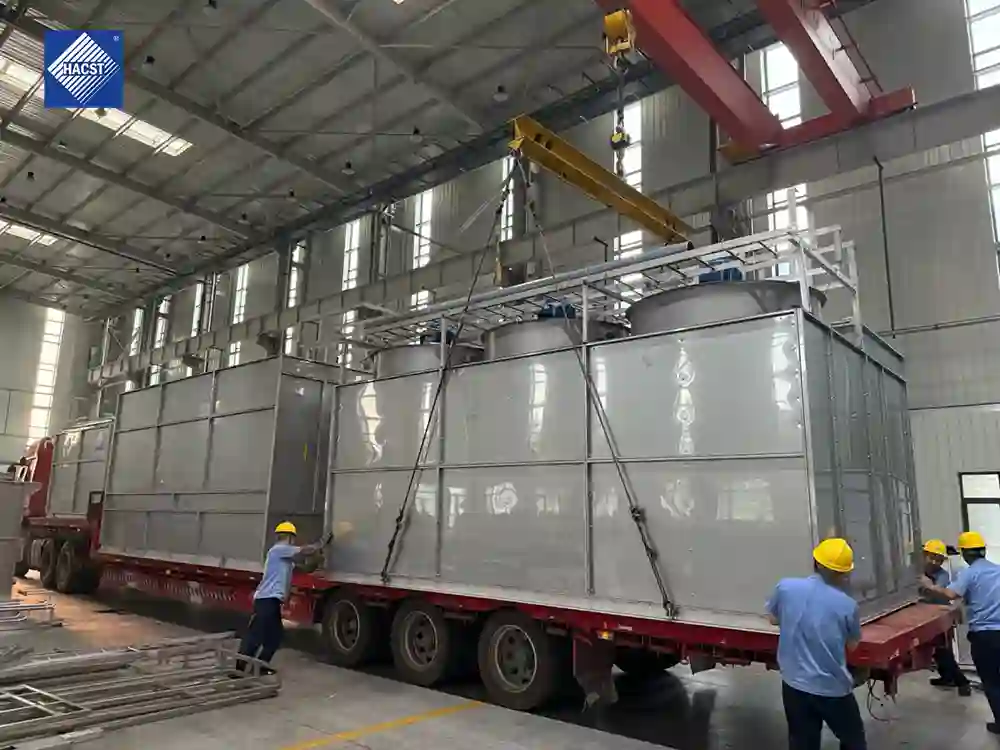
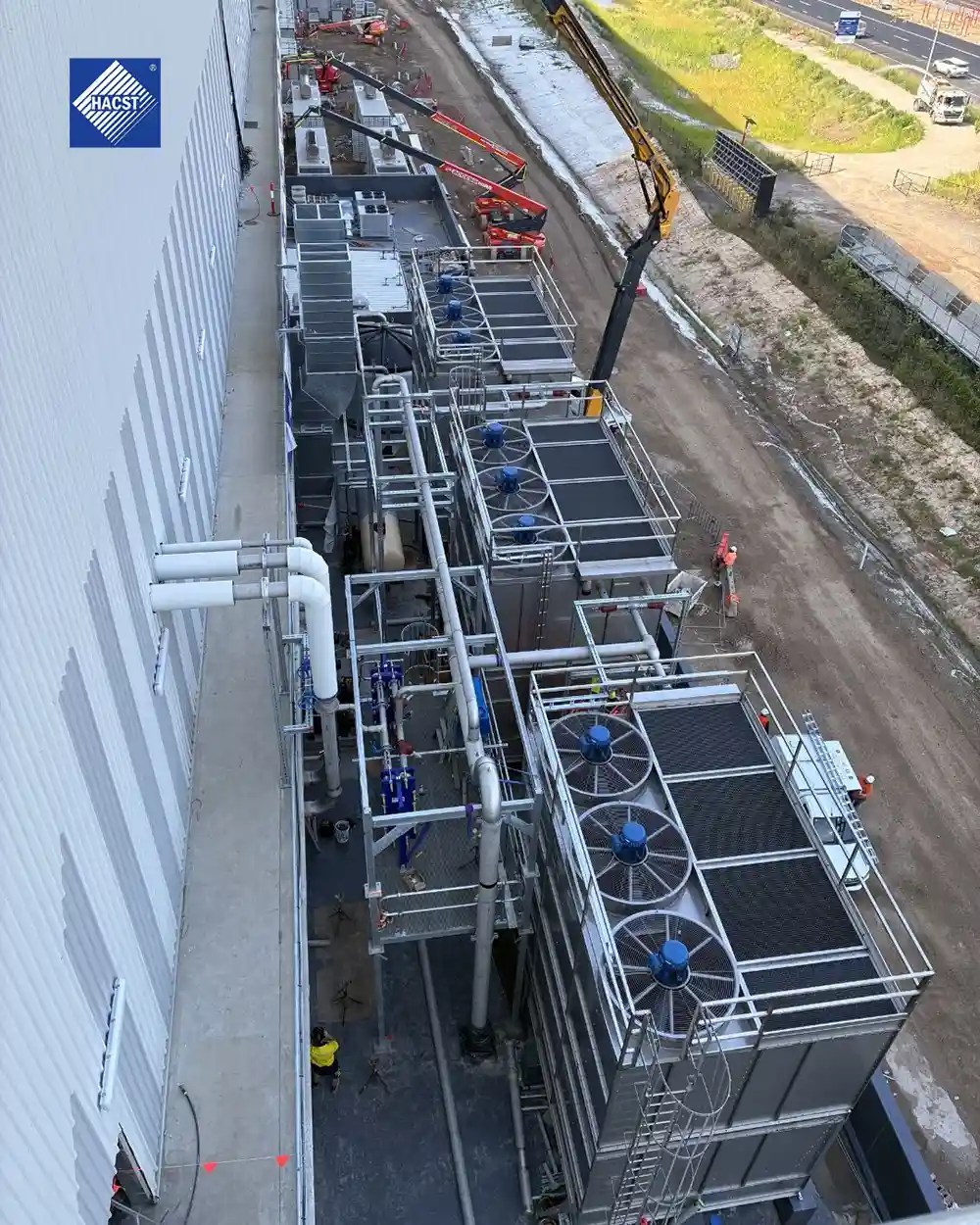
Seafood Refrigeration Evidence
Project Data to Confirm Before Selection
| Refrigeration duty | Refrigerant, refrigeration capacity and condensing temperature |
|---|---|
| Site environment | Humidity, salt exposure, washdown and corrosion risk |
| Water conditions | Water chemistry, treatment capability and discharge limits |
| Maintenance | Cleaning access, drift control and service clearances |
Providing these details helps our engineers prepare a more accurate equipment selection and technical proposal.