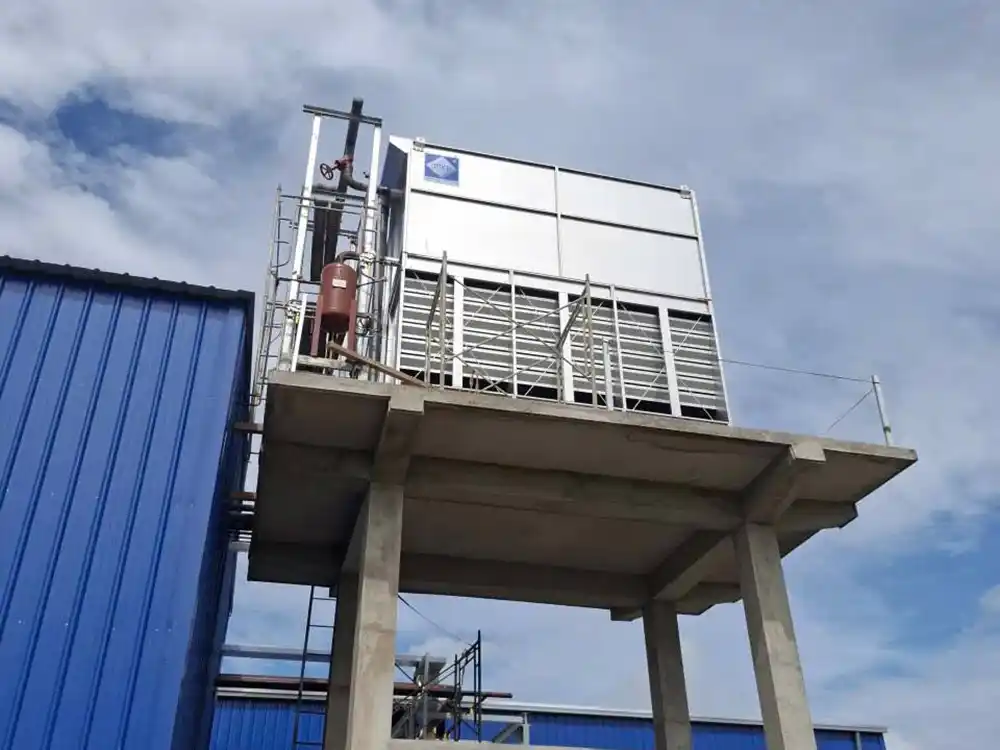
A closed circuit cooling tower can operate reliably in cold climates, but the coil, spray-water circuit, basin and exposed piping do not all face the same freezing risk. A safe winter plan must cover operating, standby and power-failure conditions.
Identify the circuits at risk
- Process loop: fluid inside the heat-transfer coil and external process piping.
- Spray-water loop: basin, pump, distribution piping, nozzles and water exposed to outdoor air.
- Makeup and drain lines: small pipes that can freeze quickly when stagnant.
- Accessories: level controls, strainers, valves, instrumentation and heat-traced sections.
Choose the right protection method
There is no universal winter setting. Suitable methods include an engineered glycol concentration in the process loop, positive drainage to a heated indoor tank, basin heaters, heat tracing and insulation, recirculation, fan-speed control, and dry operation when the load and ambient condition permit. The final sequence should be approved by the project engineer and aligned with the equipment manual.
Process-loop protection
If the coil cannot drain completely during shutdown, use an appropriate antifreeze solution or maintain verified circulation and heat input. Glycol concentration must be based on the required freeze point, fluid temperature and local minimum condition. Higher concentration changes viscosity, heat capacity, pressure drop and pump power, so the thermal selection should use the actual mixture.
Spray-water and basin protection
For prolonged cold-weather operation, control the spray system so water does not remain in vulnerable external lines when the pump stops. A remote sump located in a heated space is often used on severe-climate projects. Where a basin heater is applied, it is intended to prevent stagnant basin water from freezing; it is not a substitute for protecting coils and external piping.
Fan and capacity control
Low load and cold air can cause overcooling and localized ice. Variable-speed fans, staged fans, spray-pump control and temperature sensors should be coordinated to maintain the required leaving-fluid temperature. Avoid rapid cycling and do not reverse fans unless the tower manufacturer has approved that sequence for the specific model.
Pre-winter checklist
- Verify glycol type, concentration and inhibitor condition.
- Test heaters, heat tracing, thermostats, alarms and low-level protection.
- Inspect drain valves and confirm drain paths are unobstructed.
- Clean strainers and nozzles; check pump seals and basin level controls.
- Inspect louvers, eliminators and coil surfaces for locations where ice could bridge.
- Confirm the controls respond correctly to low temperature, low load and power restoration.
- Document who is responsible for inspection during extreme weather.
Shutdown and restart
A winter shutdown procedure should define which circuits continue circulating, which drain automatically and which require manual verification. On restart, inspect for ice, blocked fans, damaged piping and abnormal vibration before returning to full load. Never use flame or uncontrolled heating to thaw components.
Design information HACST needs
For a winterized closed circuit cooling tower, provide fluid type, concentration, flow, temperatures, winter minimum, operating schedule, standby duration, available indoor space, electrical supply and control philosophy. Send the data through Contact HACST for project-specific review.
FAQ
Does a basin heater protect the coil?
No. A basin heater protects water in the basin under its design condition. Coil fluid and exposed piping need their own freeze-protection method.
Can the tower run dry in winter?
Some closed-circuit designs can reject part or all of the load in dry mode under suitable ambient conditions. Capacity must be verified for the specific unit and duty.